

When I was seventeen, I wrote my college essay about heroes.
I liked the unlikely heroes: Percy Jackson, the kid who kept getting expelled from school before discovering he was a demigod. Harry Potter, the unwanted orphan who learned he was a wizard. Their stories always began with confusion. Their gifts were hidden from them. The first chapters were never about success but about misunderstanding who they were.
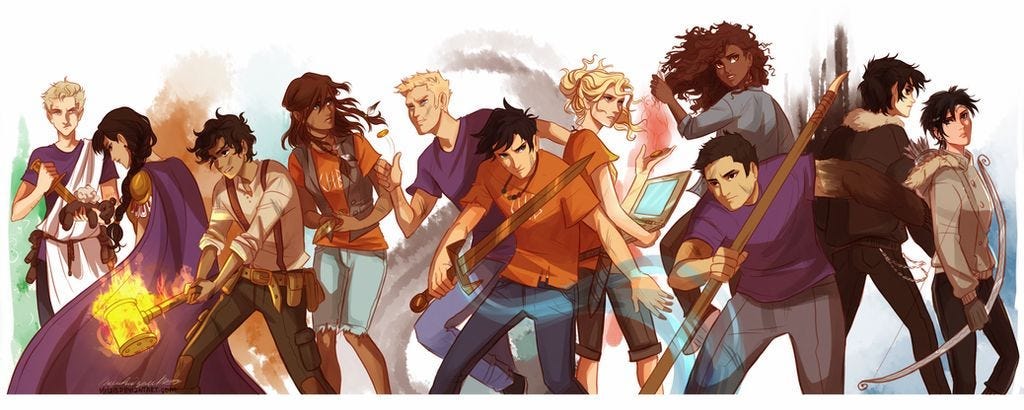
I found those stories comforting because I couldn’t identify any obvious talent in myself.
I had tried everything. Piano and guitar. Soccer and volleyball. Art classes, theater classes, dance classes. I learned enough Spanish to hold a conversation and enough German to embarrass myself in one. Most of these activities ended the same way: I enjoyed them, but I wasn’t particularly good at them.
Writing felt different.
In my essay, I described writing as my superpower. It was the first thing I had found that felt natural. While other people seemed to possess obvious talents, writing was quieter in the sense that only I could read it. It was simply the thing I kept returning to. I imagined that college would help me develop it further. Like the mentors in the fantasy novels I loved, professors and editors would guide me toward the person I was meant to become.
Looking back, what surprises me is not how young I sound. It is how much faith I had.
I believed that effort led somewhere.
Not immediately, of course. The heroes always suffered first. But eventually. Eventually, the story revealed why the struggle had been necessary.
I carried that belief with me for years.
I studied constantly. I worked while I was in school. I took internships. I accepted jobs because they would be “good for my professional development,” including jobs I hated. I delayed fun, postponed rest, and convinced myself that every sacrifice would make sense later. The future was always just around the corner, waiting to justify the present.
Sometimes I wonder whether that future ever arrived.
I don’t think it did. At all.
Today I am unemployed and living with my parents again.
When people hear that, they often assume the painful part is the unemployment itself. It isn’t. Plenty of people lose jobs. Plenty of people struggle professionally.
The painful part is the confusion.
I did the things.
I followed the instructions.
I got the degree. I built the skills. I won awards. I worked in newsrooms that would have seemed impossibly prestigious to the seventeen-year-old who wrote that essay.
And yet I find myself staring at the same question she was asking.
What now?
When I was younger, I thought the part I related to was the beginning.
The feeling of being ordinary. The feeling of not knowing what I was good at. The feeling that everyone else seemed to have discovered something about themselves that I hadn’t.
But there was another part of those stories that fascinated me.
I always looked at the heroes in awe when things fell apart. When they lost people. When they were exhausted. When they were scared. When every plan failed, and they had every reason to quit, they somehow kept going anyway.
Back then, I read those scenes the way you read about magic powers or dragons. They felt exciting, dramatic, and larger than life.
Now they feel almost impossible.
The older I get, the less impressed I am by the heroes’ victories and the more impressed I am by their endurance. I don’t care that they defeated the villain. I care that they woke up the next morning and kept moving after everything that happened to them.
When I was seventeen, I thought my superpower was writing.
At twenty-five, I’m not so sure.
What I know is that I look at those heroes differently now. I no longer see myself in the moments when they discover they are special. I look at them in the moments when they are exhausted, frightened, grieving, and completely lost, and I think: I could never do that.
And yet somehow they do.
They keep going.
Maybe that was the real superpower all along.
iykyk