
Preparing for the digital nomad lifestyle
Tiffany's tips on how to feel prepared to travel while working.

There’s a very specific view on social media about the digital nomad life.
Surely, if you’re on any social network, you’ve seen photos of a computer on the beach, stories of a last-minute flight, and the feeling that working while seeing the world is an extended vacation. Social media helps build this image.
What they show less of are the eight (or more) hours of work, the internet that needs to work, the time zones, and the worry about losing your job when the Airbnb is without power for 24 hours.
For Tiffany, the reality lies somewhere between these two extremes.
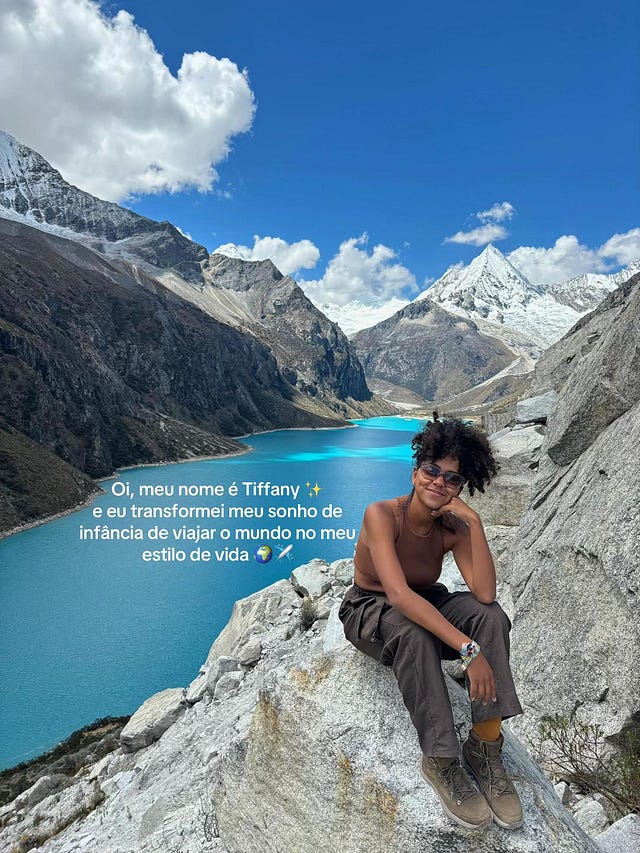
 Tiktok failed to load.
Enable 3rd party cookies or use another browser
The decision to live traveling didn’t happen overnight either. Before working remotely, there were short trips, an exchange program in Canada, a season in Egypt, backpacking through Argentina and Uruguay, and later, a seven-month backpacking trip through South America. All in preparation for her ultimate goal: the digital nomad life.
“I think it was something built up,” she said about how she got into this lifestyle.
When she returned to Brazil after backpacking, she already knew her next goal.
“I came back focused on getting a remote job, yes or yes.”
But achieving remote work didn’t make the fear disappear.
In fact, it created others. Unlike previous trips, now there was a responsibility. A salary. A routine. A team expecting everything to work.
“My fear wasn’t about something that was going to happen to me. It was a different kind of fear. The fear that I could lose my job because of something I couldn’t manage on the road.”
Tiffany laughs as she recounts suffering from overthinking.
“I overthink before making a decision.”
That’s why preparation became part of the process.
Before taking her first long backpacking trip, she researched. Before trying the digital nomad life, she researched again. For her, courage and planning go hand in hand.
“I think you have to do a lot of research and really understand if you want to do it. Preparation further neutralizes fear.”
This logic applies even to those who have never considered working while traveling. She believes that no one needs to start with a trip around the world. Courage can be built in small doses.
A movie alone, a restaurant, a short trip to a nearby city, a hostel.
“You gradually gain more and more space.”
When she finally decided to try the digital nomad life, she chose Guatemala.
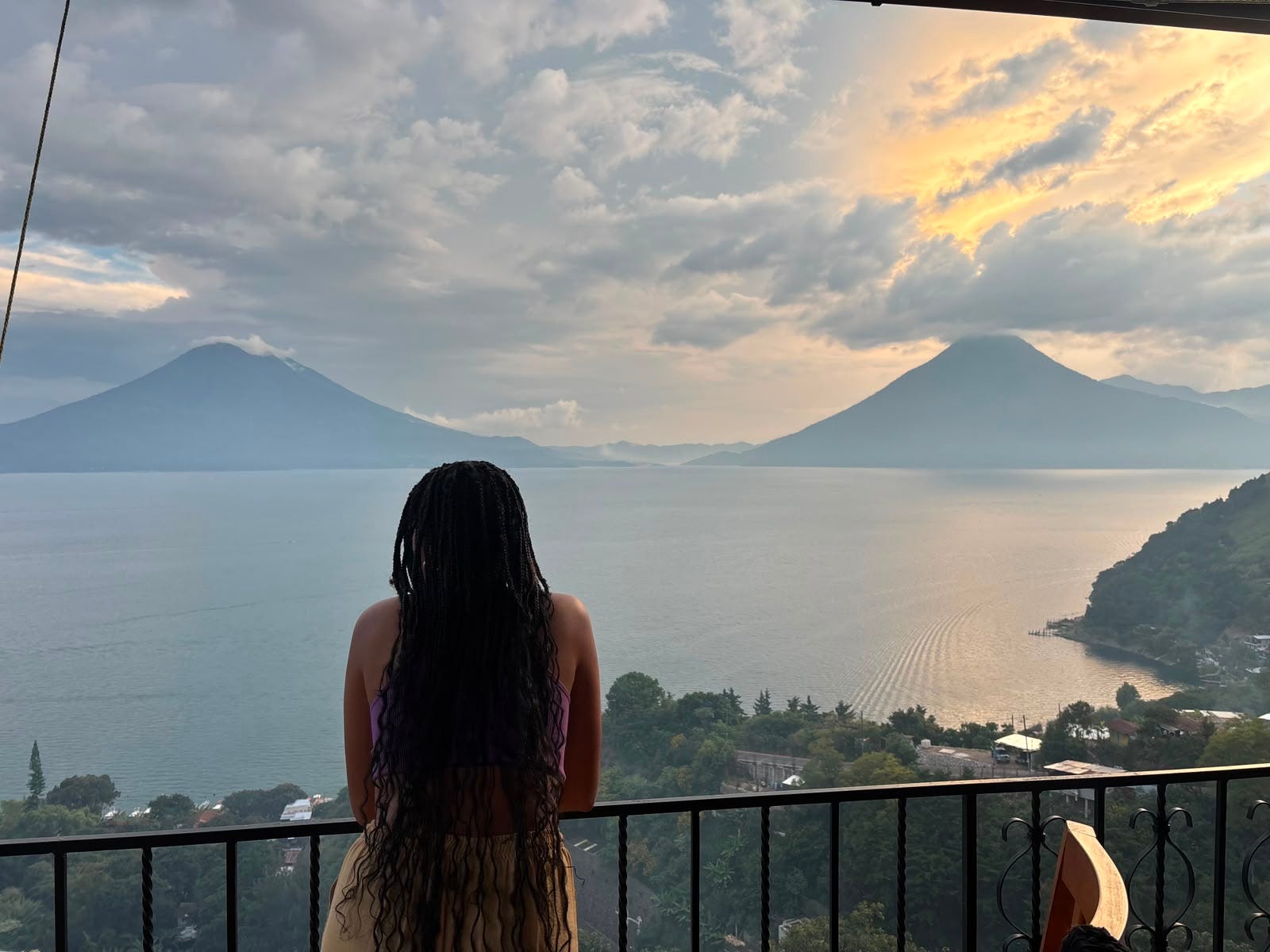
The choice wasn’t random.
She spoke Spanish, already knew the dynamics of Latin America, and knew that this would reduce the number of unforeseen events. The work schedule also helped: mornings and early afternoons. The rest of the day was free to explore the country.
In practice, she discovered that the biggest secret wasn’t productivity. It was adaptability.
“You have to be adaptable. If you’re not an adaptable person, you can’t do this.”
Adapting in this case means accepting that there’s no fixed desk, a permanent office, or the comfortable routine of home. It means learning to choose quiet accommodations, plan trips, and solve problems without panicking.
And problems do happen.
In Guatemala, for example, she was without electricity for 24 hours at her Airbnb.
“You can’t just stand still,” she explained. “You have to solve the problem.”
Perhaps this is the least photographed aspect of geographical freedom, and the part where research and preparation make all the difference. It’s about learning to build a routine in motion.
She explains that it’s a lifestyle for those willing to do “slow travel.”
The term means traveling slowly. Traveling slowly because you won’t be able to constantly change locations. That’s unsustainable for someone who works while traveling, and she prepared for that.
“I particularly enjoy being able to experience cultures with my own eyes, as if I lived there.”
Traveling slowly. Living in a place instead of just visiting it.
All the fears she carried to Guatemala continued to exist. They just stopped controlling the story.
The freedom to travel isn’t the absence of problems.
It’s discovering that you can solve them.
If you enjoyed this, here’s more about how Tiffany cultivated the courage to travel alone:
